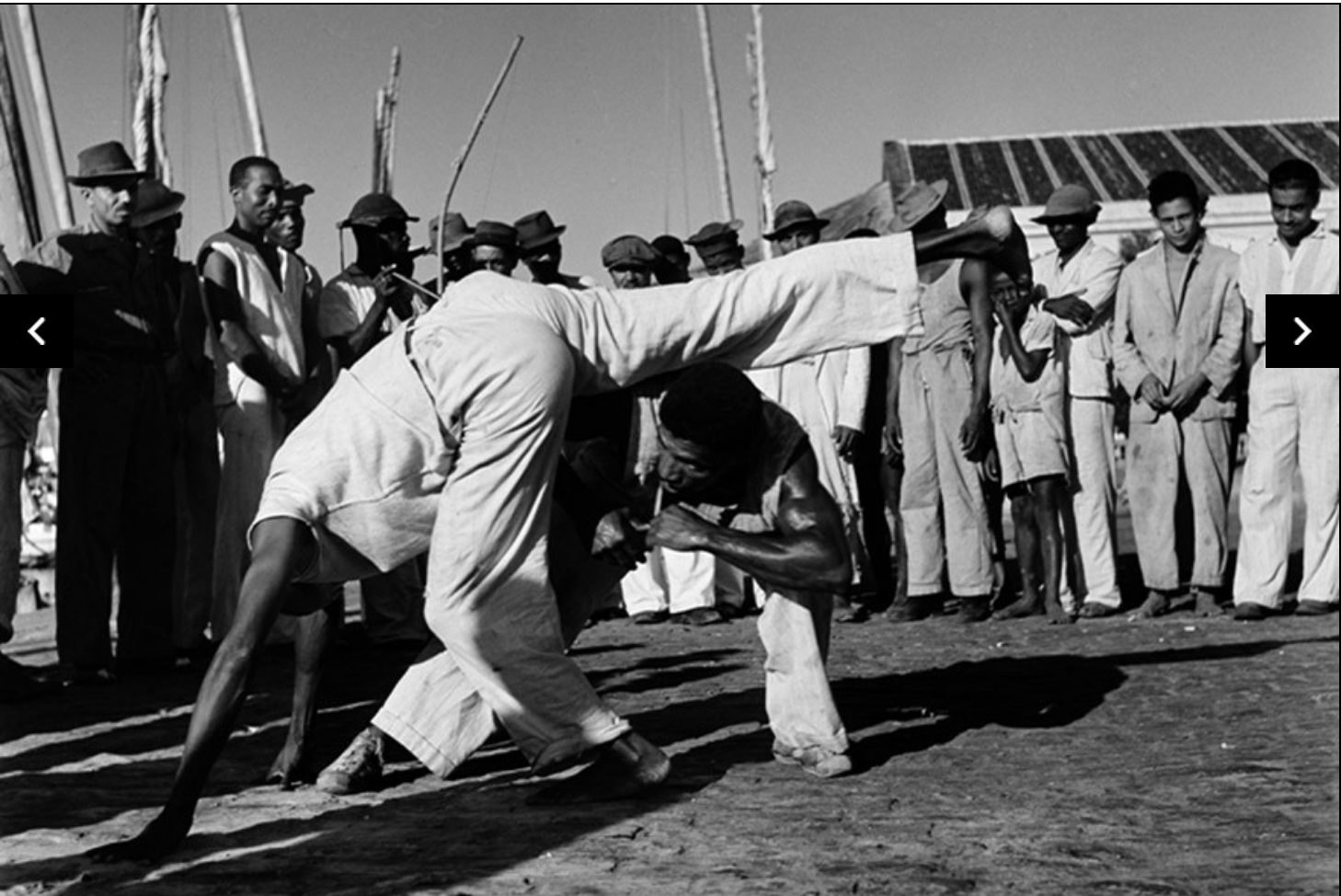
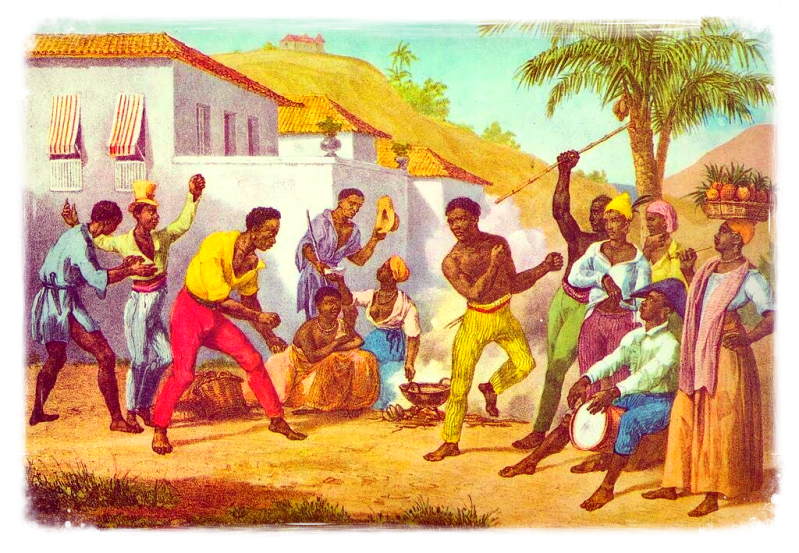
THE HISTORY OF CAPOEIRA
From resistance to recognition — a living Afro-Brazilian tradition.
Many theories about the origins and history of Capoeira remain debated because historical documentation is limited. Some records related to slavery were destroyed after abolition, making it difficult to reconstruct every part of its history with certainty.

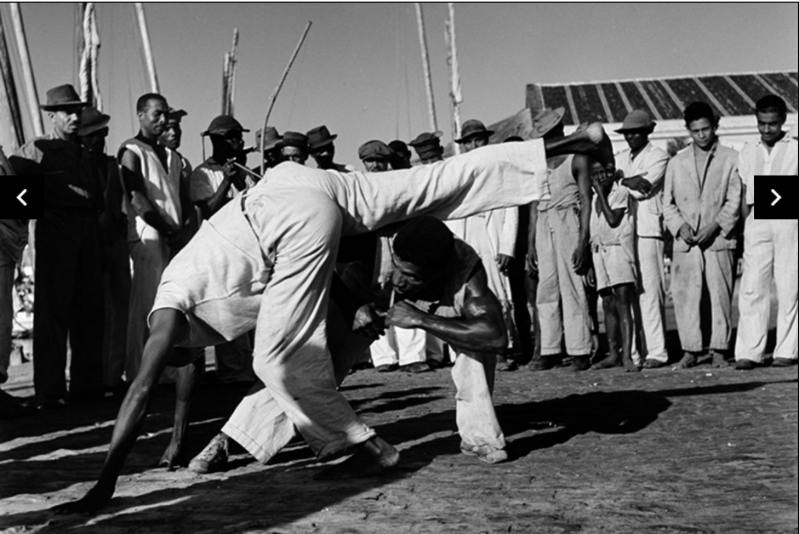
ROOTS · RESISTANCE AND FREEDOM
Born in Brazil from African resistance and cultural survival, Capoeira grew within Afro-Brazilian communities as a powerful expression of movement, music, identity and the struggle for freedom.
1890 · CRIMINALIZATION
Despite its importance within Afro-Brazilian communities, Capoeira was criminalized under Brazil’s Penal Code in 1890. Practitioners were closely monitored by the police and could face severe punishment. As a result, Capoeira became increasingly marginalized and was often practised in secret.
1937–1940 · THE PATH TO RECOGNITION
During the 1930s, attitudes towards Capoeira gradually began to change. In 1937, Mestre Bimba received official authorization to operate his Capoeira school, marking an important step towards public recognition. Capoeira was no longer included as a criminal offence in Brazil’s Penal Code of 1940.
2008–2014 · CULTURAL HERITAGE
Today, Capoeira is highly respected as an Afro-Brazilian cultural expression. In 2008, the Capoeira Circle and the traditional knowledge of Capoeira masters were officially recognized as Brazilian cultural heritage by IPHAN. In 2014, the Capoeira Circle was added to UNESCO’s Representative List of the Intangible Cultural Heritage of Humanity.
160+ COUNTRIES · A LIVING TRADITION
Capoeira is now practised by people of all ages in more than 160 countries. Born from resistance and the struggle for freedom, it has evolved into much more than a martial art. Capoeira brings people together, strengthens communities and preserves Afro-Brazilian history, music, culture and tradition.
Practising Capoeira helps improve coordination, self-confidence, flexibility, strength, musicality and physical fitness. It is also a wonderful way to meet new people and become part of a welcoming community.
CAPOEIRA LIVES ON
Come and train Capoeira Angola with Professor da Lua at Escola de Capoeira Amsterdam. Everyone is welcome!